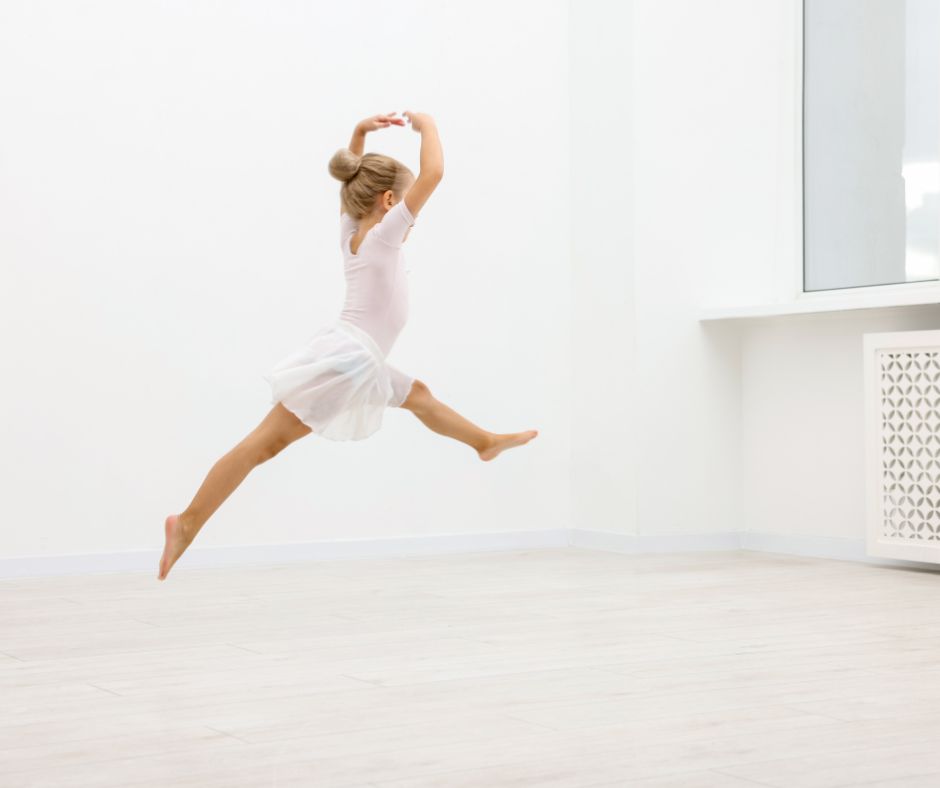


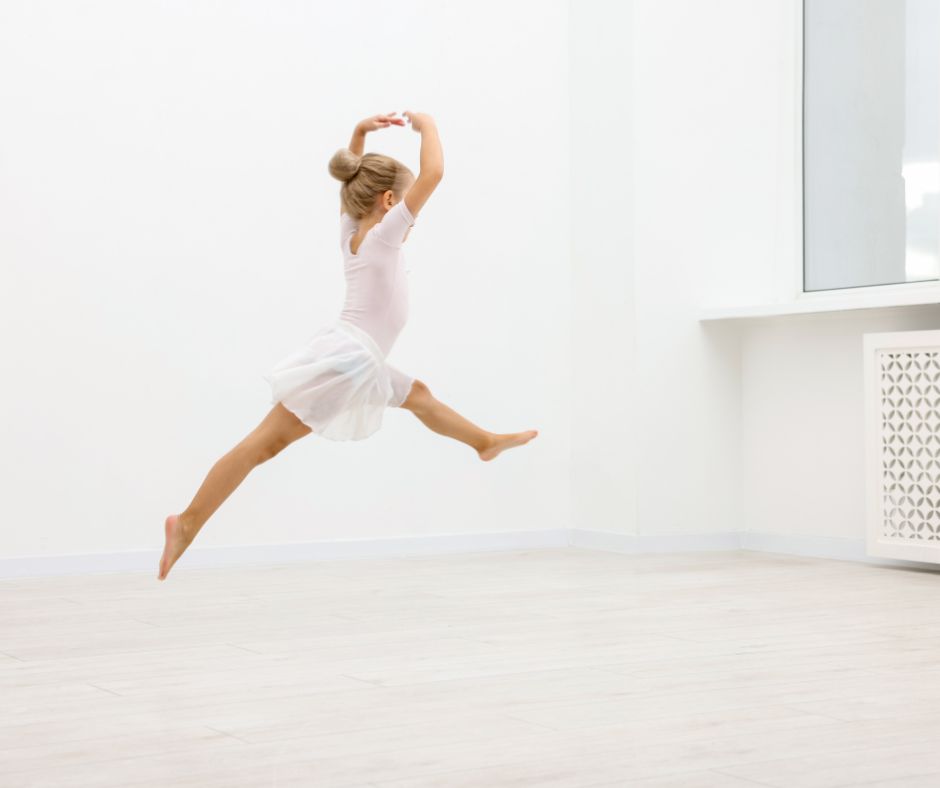
Picture this: a student is working hard, the legs are “in the right place,” the arms are set — but the jump is low, heavy, and feels lifeless. The usual reaction? “Weak legs,” “not enough strength,” “they need to jump more.” But in most cases, it’s not about strength. It’s about how the hips and turnout are working.
A jump isn’t just about pushing yourself up. It’s a full-body coordination, where the hips set the direction, the knees pass the impulse, and the feet finish the push. If turnout is created only from the feet instead of coming from the hip joint, the impulse gets lost before takeoff.
A typical situation: a student does a sauté, the feet look turned out, but the knees are facing forward. The jump is there, technically — but there’s no height. The issue is that the turnout is coming “from below,” not from the hips. And at this point, what needs to change isn’t the shape, but the task: not “turn the feet out,” but “rotate from the hip.”
There’s a simple way to check where the issue is. Put the student in first position and ask them to lift the knee. If there’s no turnout from the hips, the knee will go forward or inward. You’ll see the same in demi plié: if the knees drop forward, the jump will stay low no matter how strong the legs are.
In jumping, turnout isn’t just about how it looks — it’s mechanics. When the thigh opens correctly, the deep hip muscles engage, the impulse carries through, and the body starts working as one system instead of separate parts.
You can often see this: one student has “perfect” placement but jumps low, while another with less flexibility moves higher and lighter. The difference is that the second one is using the hips, while the first is holding a shape.
One of the key mistakes teachers make is focusing on the outer shape instead of what’s happening inside the body. Cues like “point your foot” or “turn your legs out” without explaining where the movement comes from may work short term, but they don’t improve the jump itself.
What really changes things isn’t more exercises — it’s a shift in focus. Moving from “how it looks” to “how it works.” Once a student starts to feel where the movement begins, the technique starts to build on its own.
In practice, this means a few things:
- First, the core needs to be active before jumping — otherwise the impulse won’t be collected.
- Second, plié needs to be conscious: the knees should move in the direction of the thighs, not separately.
- Third, adding a pause before takeoff gives the body time to organize the movement.
Another common scenario: a student jumps fast but seems to “kill” the jump. In this case, a simple task helps — a slow plié, a short pause, and then the jump. In most cases, this immediately adds height and control.
There are a few practical tools that consistently work:
- A pause before the jump helps collect the impulse and reduce chaos.
- The cue “knees go where you want to jump” automatically aligns direction.
- Fewer repetitions with better quality help avoid reinforcing mistakes.
- Working slowly helps understand the mechanics instead of just copying movement.
- And most importantly — the focus should be on the hips, not the feet.
It’s important to understand that turnout isn’t about “more,” it’s about function. Too much turnout without control can ruin a jump just as much as not enough. It’s not about more — it’s about more precise.
A good jump isn’t just about height. It’s when the body stops getting in its own way. And when a student stops fighting the floor and starts pushing off it — that’s when the real work is already done.