

When a child first enters a choreography studio, everything feels new: a large mirror, music, unfamiliar movements that the body does not yet fully obey. But very quickly a detail appears without which it is impossible to imagine any class — dance shoes.
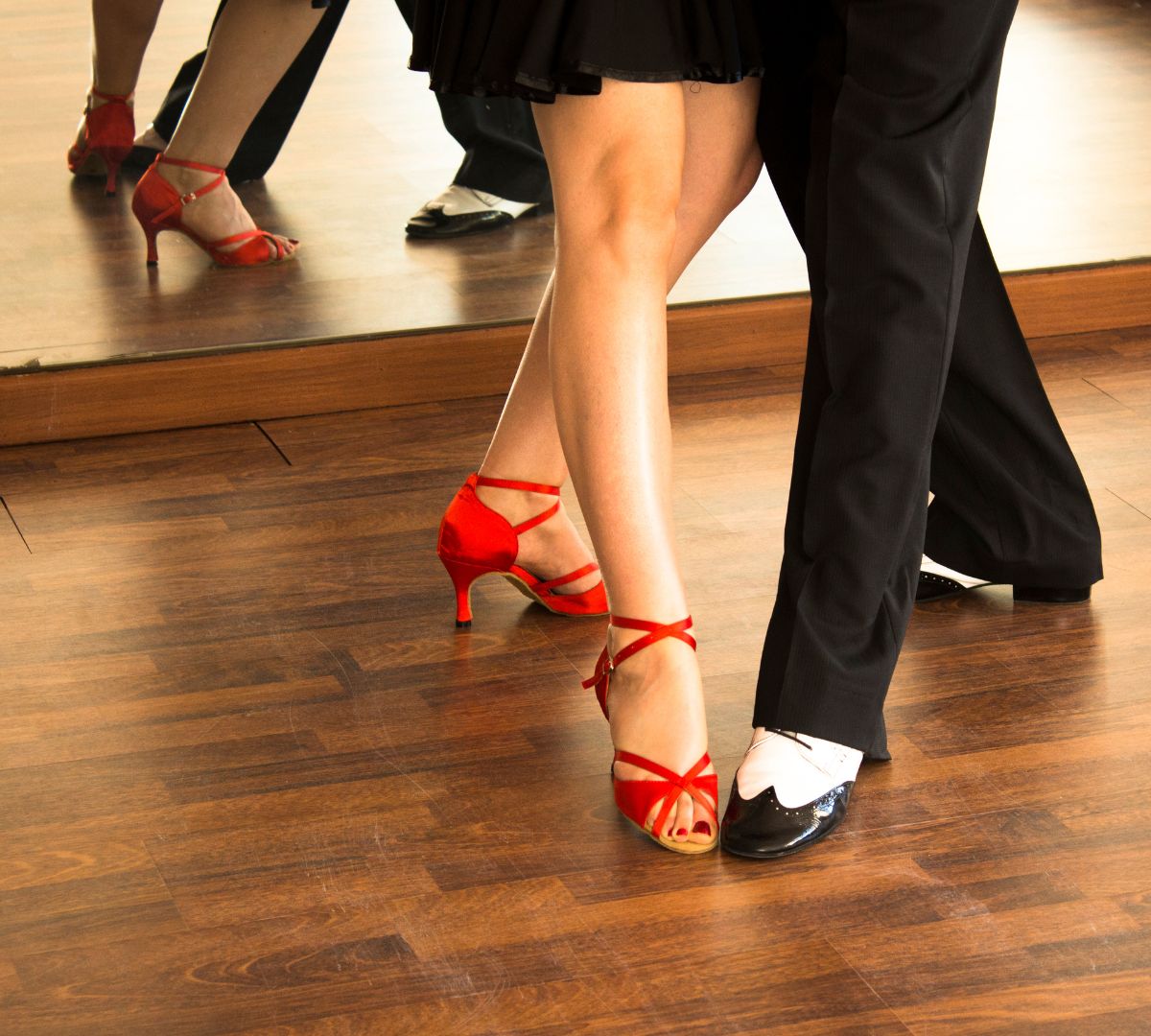
For many parents it comes as a surprise that different dance styles require different types of footwear. However, this is not a whim of teachers. Each choreographic genre has its own movement technique, its own way the foot works, and even a different feeling of the floor. That is why proper footwear helps a dancer not only move comfortably but also develop correct technique.
Classical Ballet
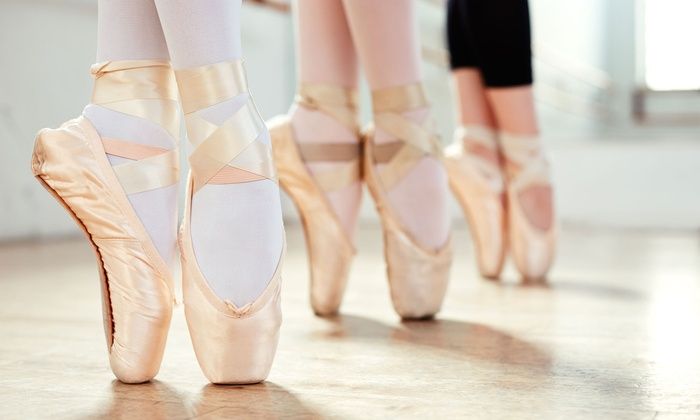
Ballet slippers are professional shoes for dance, choreography, and ballet training. They are soft dance slippers made of fabric or soft leather, with two silk ribbons in the same color (usually white, pink, or peach) designed to gently secure the slippers on the foot. Traditionally, women’s ballet slippers are pink, while men’s are white or black. Flesh-colored ballet slippers, which can be worn by both men and women, are used to create the impression that the dancer is performing barefoot.
This is why it is so important to choose ballet slippers correctly — according to size and the width of the foot. Ballet slippers should fit snugly, not hang loosely, but also should not compress the foot, restrict blood circulation, or limit movement. Invisible yet indispensable helpers, they protect the foot from minor injuries and chafing during rehearsals and performances. The degree of wear on ballet shoes often reflects how diligently students work during classes and rehearsals. The place where the shoe wears out can even tell an experienced teacher how correctly the foot is working, and therefore how properly a particular dance element is being performed. This makes it possible to correct foot placement in time and adjust the execution of certain movements, gradually achieving perfection.
Pointe Shoes
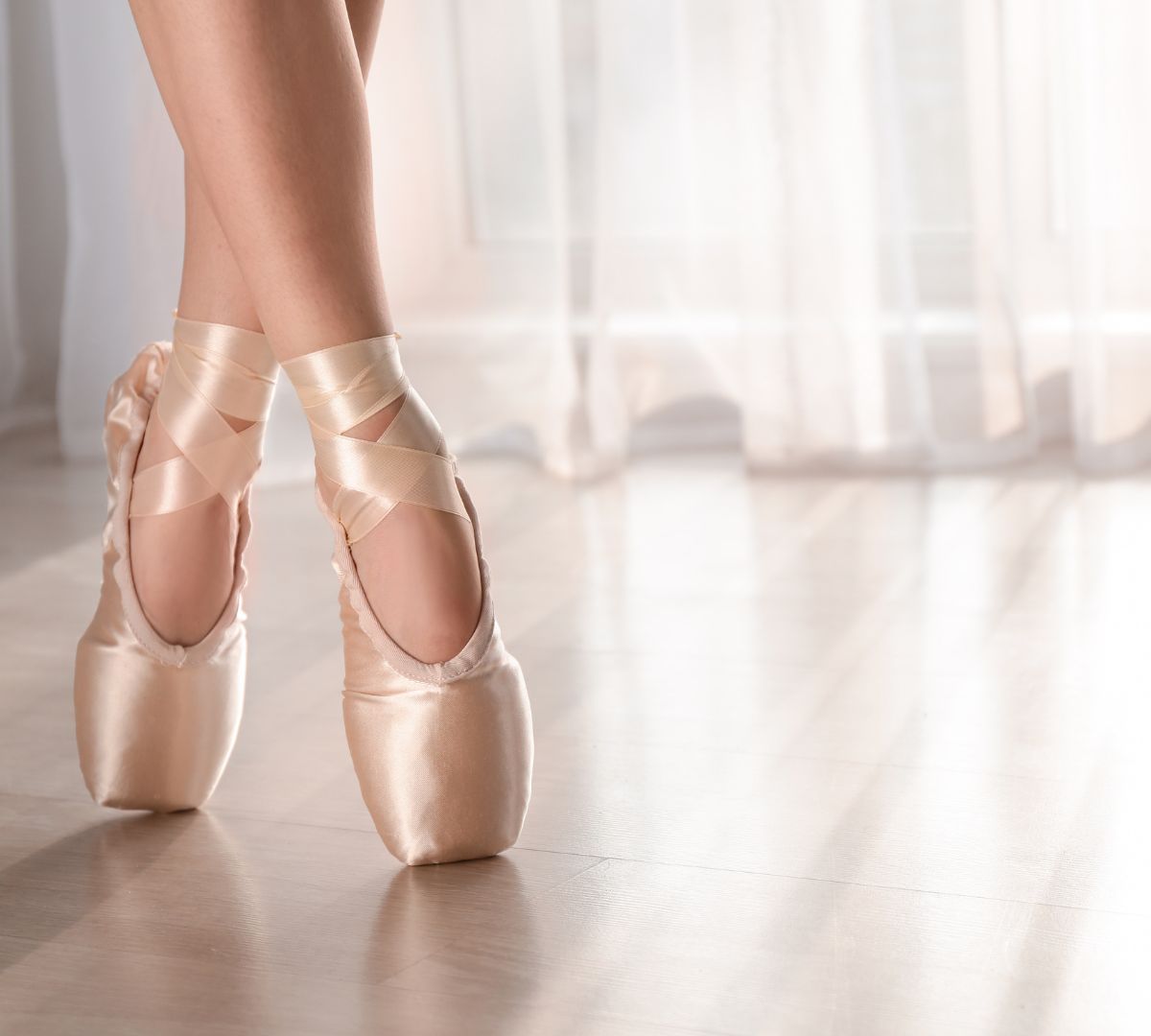
When choosing pointe shoes, it is important to consider the model, the width of the foot, and the stiffness of the insole. First of all, attention must be paid to the size when trying them on. One should stand with both feet placed parallel to each other. The toes should touch the front of the shoe but should not be pressed tightly against it. There should also be no empty space inside the pointe shoes. Attention: practicing in pointe shoes that are too large is dangerous and may lead to injuries. Pointe shoes are not divided into right or left — you decide yourself, depending on your own comfort, which shoe is more suitable for the left or the right foot.
The inner surfaces may feel similar to silicone (in the toe area), which helps prevent discomfort in the toes while performing various pirouettes and dance movements.
Folk Dance
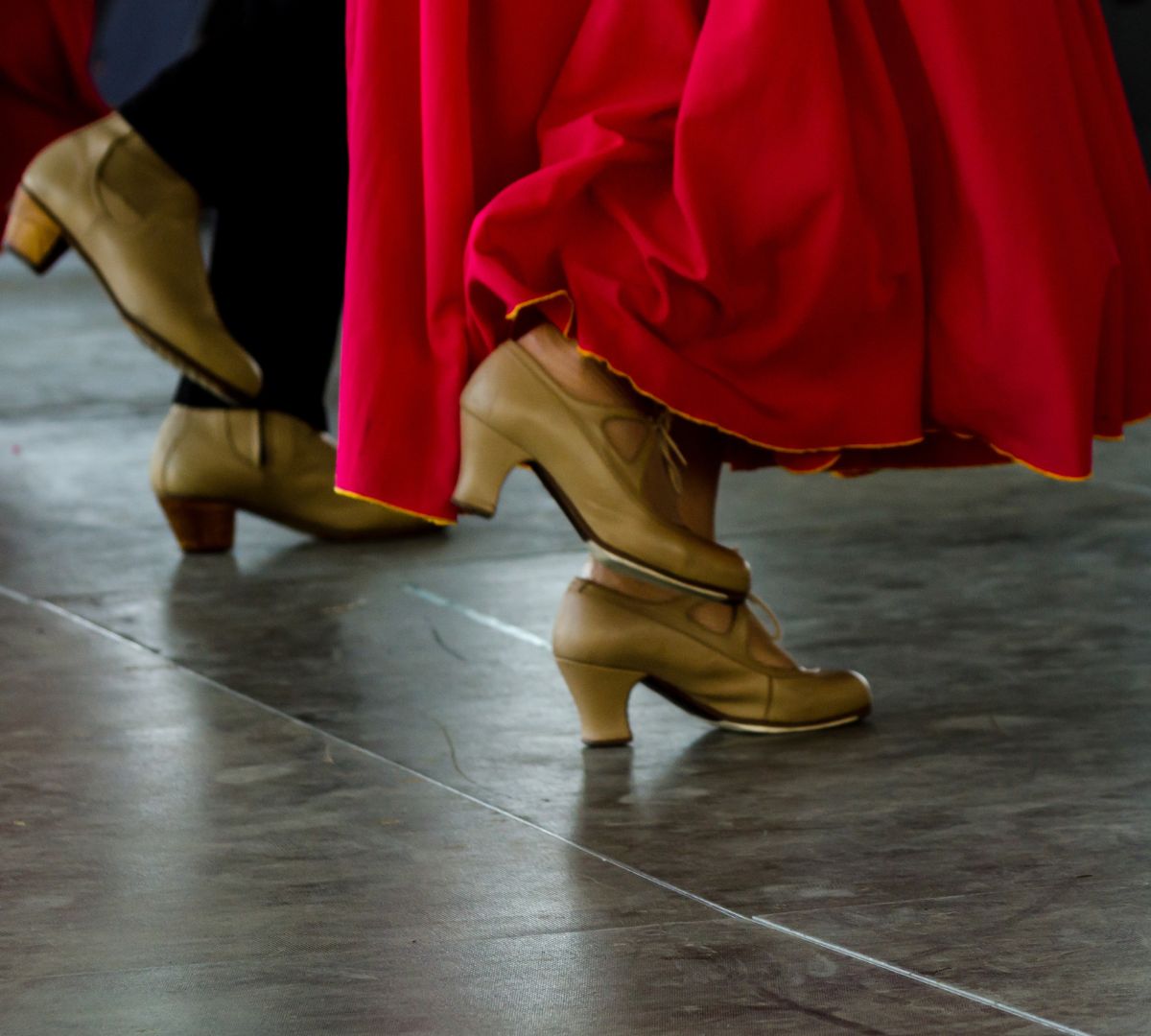
Costume plays a significant role in folk dance classes. The dress is the main attribute that first defines the style of the dance, the mentality of the people, and their distinctive features. However, footwear also performs an important function. In addition to ensuring successful performance, dance shoes beautifully complement any costume or dress and elegantly complete the stage image.
Women’s shoes for folk dancing are usually closed models with a comfortable structure. Such footwear often resembles classic pumps, secures the foot with one or two straps, and has a stable heel. It is important that the shoes do not cause discomfort. That is why they are usually made of soft leather or textiles. The heel is typically shaped like a wide horseshoe, allowing the foot to remain comfortable even during extended dancing.
Footwear for folk dancing should meet the following requirements:
- Match the style and character of the dance
- Have historically accurate designs and details
- Be comfortable and convenient during performance
- Be made of high-quality and durable materials
- Withstand significant loads during training and rehearsals
- Maintain a presentable appearance for a long time
Special materials are selected both for the upper part of the shoe and for the sole. Any model of folk dance footwear can be modified, adapted, or decorated according to personal taste, provided it still matches the overall style of the dance. For example, Ukrainian dances often use red or black boots. Northern peoples perform folk dances in footwear similar to traditional fur boots. Georgian and Tatar dancers wear boots called ichigi, where the sole is made of soft leather and the shaft has a high fold with a rubber insert on the inner side. There are also special requirements for shoes used in dances with rhythmic foot tapping: the soles and heels must protect the foot from impacts during stamping movements. When purchasing footwear, remember that the most important factor is the quality of the materials from which it is made.
We wish you bright performances in folk dances that convey the soul and character of the people whose spirit you strive to express to the audience through your dance.
Footwear for Contemporary Dance and Fitness Classes
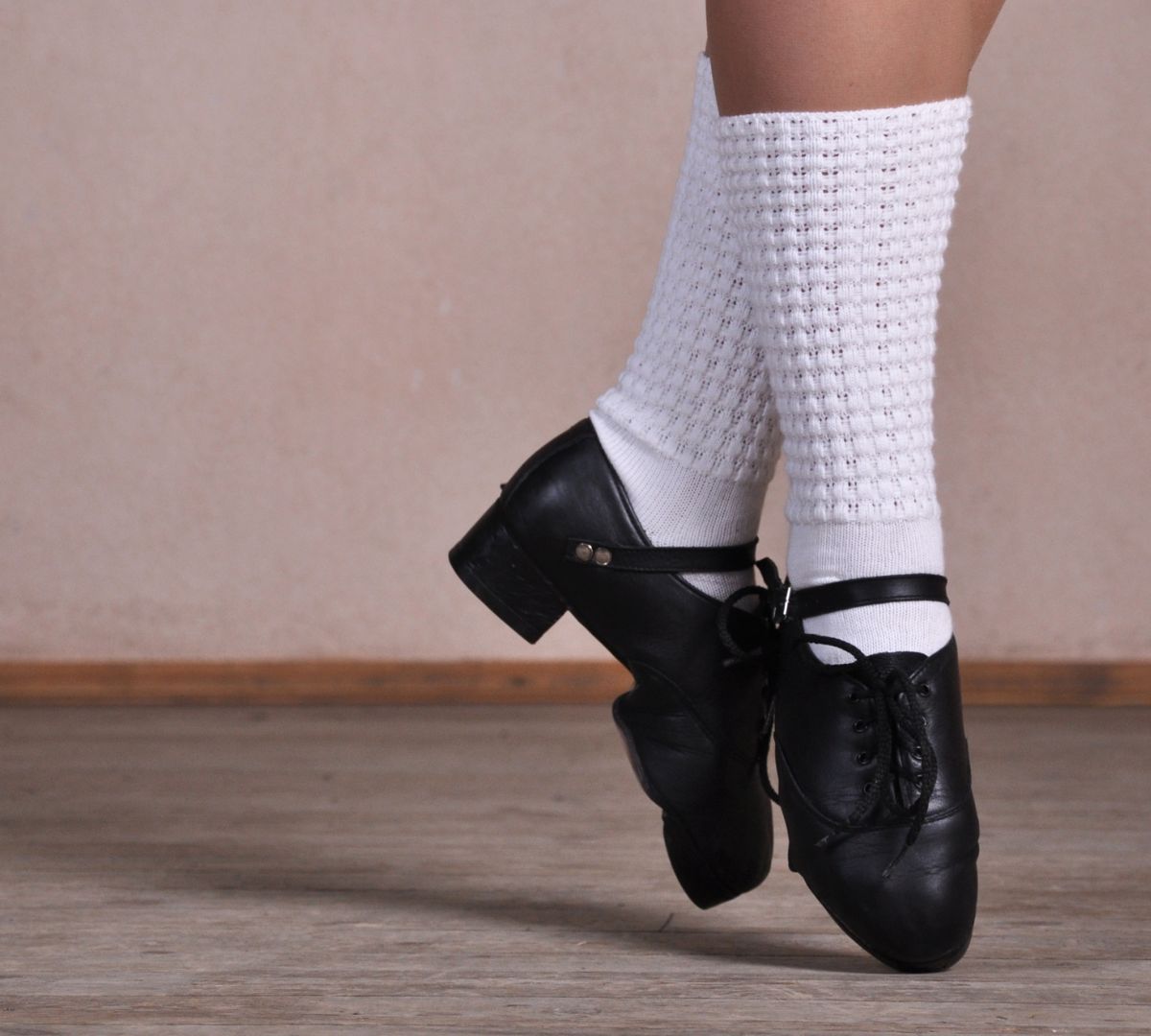
Jazz sneakers (also called jazz shoes) are specialized dance footwear. Their main feature is that the foot remains flexible and free inside the shoe. Jazz shoes are soft footwear where a small gap exists between the toe and heel sections. This provides greater comfort for the foot during movement. The toe and heel are usually reinforced to soften impacts.
Jazz shoes are suitable not only for those who practice jazz dance but also for dancers who enjoy oriental dance, strip-plastic dance, and other athletic dance styles.
Jazz shoes are usually made of fabric or natural leather. Leather models are significantly more comfortable and tend to last much longer, although fabric versions are usually less expensive. In addition, fabric shoes do not require breaking in. When choosing dance footwear, focus on your personal comfort and convenience. You will train in these shoes many times, and nothing should distract you during practice.
When selecting jazz shoes, rely on the actual size of your foot. Children should not buy jazz shoes “for growth.” The foot should not move around inside the shoe, but it also should not be squeezed or feel too narrow.
In terms of appearance, jazz shoes also differ from one another. They may be high or low, with laces or elastic bands, with or without heels, and with a sporty design. Sport-style jazz shoes, by the way, are also excellent for yoga, fitness aerobics, and strip-plastic classes.
Only in comfortable, well-fitting footwear that suits the stage image can a dancer fully surrender to the rhythm of the dance and feel free and confident in every movement. The more comfortable the feet feel in the shoes, the freer and more correctly the movements are performed. As a result, each gesture, pose, and turn looks more graceful and refined, creating the beauty and harmony of dance.